48 Hours, Five Challenges, Zero Familiar Faces

The challenges themselves kept changing gears.
At midnight, I was somewhere between Frankfurt and Brussels on a FlixBus, wondering whether signing up alone for Europe's biggest student business competition was either a brilliant decision or a spectacularly bad one.
By sunrise, I was wandering through Brussels' European Quarter with a coffee in hand. A few hours later, I was standing in a room with almost 300 students from around the world, not knowing a single person. It turned out that was exactly how the weekend was supposed to begin.
I'd applied to the Solvay Business Game as an individual participant, while Frankfurt School kindly sponsored my participation fee. Everything else, from the overnight journey to figuring things out once I arrived, was part of the adventure.
Then came the first surprise.
Every corporate challenge meant a completely new team. Just when you'd figured out how one group thought, debated and worked, the organisers would reshuffle everyone and you'd start all over again. New teammates. New accents. New working styles. A new WhatsApp group that would become completely irrelevant four hours later.
Building Teams at Speed
At Frankfurt School, we've spent plenty of time discussing teamwork, leadership and strategy. Solvay condensed all of that into something much less forgiving.
You didn't have weeks to build trust. Sometimes you barely had ten minutes.
The usual corporate icebreakers disappeared almost instantly. Nobody cared where you were from after the first five minutes. What mattered was who could structure the problem, who could challenge an idea without slowing the team down, who could design, who could code, and who could keep everyone moving when the clock became the loudest person in the room.
Oddly enough, that made working with strangers incredibly fun.
When PowerPoint Isn't Enough
The challenges themselves kept changing gears.
McKinsey & Company stripped away everyone's favourite safety blanket: PowerPoint. No slides. No polished animations. Just your team, a microphone and a jury waiting to see whether your ideas could stand on their own.
Then came BDO's live M&A negotiation, where 150 buyers and 150 sellers filled the room. Every table became its own six-versus-six negotiation arena, where every concession shifted the balance of the deal and every question revealed just as much as the answer. Reading the room became just as important as reading the numbers.
Between challenges, there wasn't much downtime. Most of it looked something like this: brainstorming, debating, building slides, submitting them with minutes to spare, then immediately practising the pitch while grabbing whatever food happened to be within arm's reach.
Turning Strategy into Something Real
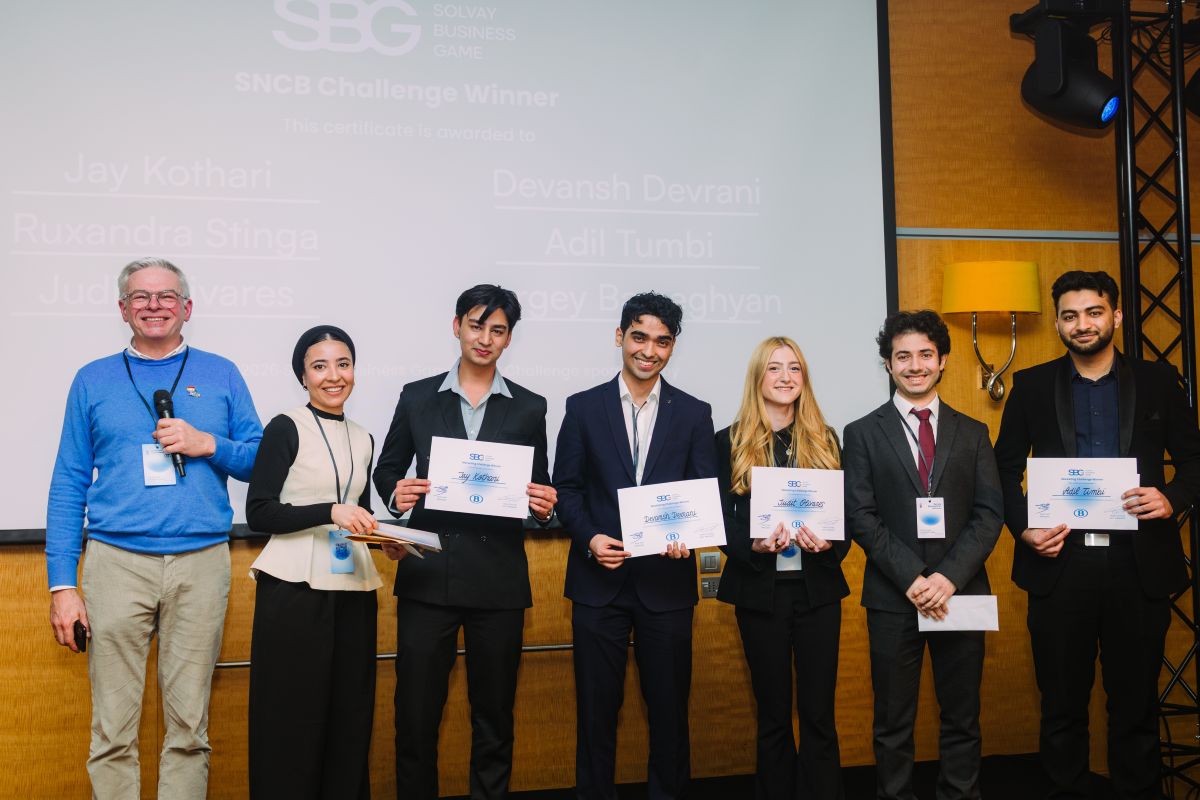
The highlight came during the challenge set by SNCB, Belgium's national railway operator. The brief felt instantly familiar because it centred on a Revenue Growth Management challenge: how do you increase leisure travel revenue?
Thanks to my role in Revenue Growth Management at PepsiCo and my MSc in Management studies, my instinct was to start with pricing, segmentation and commercial strategy. Fortunately, my team had exactly the right mix of skills to take the idea further. I focused on shaping the commercial direction, while two brilliant technical teammates, one from Spain and another studying at the Technical University of Munich, turned our ideas into something tangible.
Somewhere during the discussion, we asked ourselves a simple question: why stop at a strategy deck?
If our recommendation depended on creating a better digital experience, then simply talking about it wasn't enough. We decided to build it.
Using generative AI to speed up the development process, we built a working prototype of an updated SNCB mobile app within a matter of hours. Rather than asking the executive jury to imagine how our idea would work, we put it directly in front of them. It wasn't about showing off the technology. It was about proving that our commercial strategy could work in practice. Seeing the strategy come to life made our recommendations much more convincing than a presentation alone ever could. That approach earned us first place in the challenge.
What Brussels Reinforced
Looking back, the biggest lesson wasn't about winning.
It was about execution.
Frameworks, market analyses and polished presentations are valuable. I use them every day, and Frankfurt School has given me a fantastic foundation in all three. But Brussels reinforced the idea that ideas only matter if they can withstand pressure, tight deadlines, and a room full of people who have never worked together before.
Somewhere between the midnight bus, an unhealthy amount of Red Bull and five rounds of organised chaos, I realised that the best teams aren't always the ones with the smartest individuals.
They're the ones that get moving before perfection has a chance to slow them down.
Jay Kothari
